
Showing 41–65 of 65 resultsSorted by latest
-
The manufacture and sale of St Einstein – IV
€30.00
Zionists have always employed the bogey of “anti-Semitism” to force Jews into segregation. After thousands of years of planning and work, the Jewish bankers had finally accumulated enough wealth to buy Palestine and destroy the Gentile world in fulfillment of Jewish Messianic prophecy. They only lacked one resource needed to become King of the Jews, the Holy Messiah. That one last necessary ingredient for fulfillment of the prophecies of the End Times was the Jewish People, the majority of whom rejected Zionism. The Jewish bankers had an ancient solution for that problem. They manufactured an anti-Semitic dictator who segregated the Jews and filled them with the fear of God. Palestine was for the fearful remnant. Those who would not obey were to have their necks broken and be thrown into the well.
-

The manufacture and sale of St Einstein – V
€30.00
Popular myth has it that Albert Einstein originated the concept of “space-time”. However, not only did Einstein not originate the idea of “space-time”, he vigorously opposed it for quite some space of time. In fact, space-time theories have been quite common in folk-lore, philosophy, mathematics, religion, science, science fiction, psychology, and are even inherent in some languages.
-

“Kill the best gentiles!”
€30.00
WE ARE WITNESSING today on the world stage a tragedy of enormous proportions: the calculated destruction of the White Race and the incomparable culture it represents. Europe, former fortress of the West, is now over-run by hordes of non-Whites and mongrels. The same is true of Australia and Canada. The once productive White civilizations of Rhodesia and South Africa, extorted by the ILLUMINATI and its enforcement unit, the United States, have been forced into DEMOCRATIC governments, thereby surrendering their White families to the mercy of numerically superior and mentally inferior Negroes whose ancestors were incapable of inventing even the wheel. The most concentrated attacks on the White Race, however, are occurring in the United States of America.
-

Scarlet and the Beast I
Price range: €40.00 through €50.00
A history of the war between English and French Freemasonry
My research has revealed that there are two separate and opposing powers in Freemasonry. One, headquartered in London, subscribes to and promotes an idolatrous and pantheistic view of the world. It is monarchist, capitalistic, wealthy, right-wing. The other, in Paris, is atheistic and humanistic in origin and outlook. It is republican, socialist, poor, left-wing.
-

Scarlet and the Beast II
Price range: €40.00 through €50.00
Two Faces of Freemasonry
Freemasonry is a religion of works. One of its many symbols is the balance. Masons believe they will be judged by their works, based upon the balance of right and wrong in their lives. In this Picture Book you will see the true nature of Freemasonry. In II Cor. 11:13-15 we read of the “works” religions: “For such are false apostles, deceitful workers, transforming themselves into the apostles of Christ. And no marvel; for Satan himself is transformed into an angel of light. Therefore, it is no great thing if his ministers also be transformed as the ministers of righteousness; whose end shall be according to their works.”
-

Collected Essays
€25.00
My life will be judged worthwhile to the extent that it is of use to others. For this reason, I wish to tell of the things which have happened to me in my struggle against the forces of darkness. It is my hope that others will be forewarned of what to expect in this fight.
-
The Wall Street Trilogy
€40.00
Though he was a prolific author, Professor Sutton will always be remembered by his great trilogy: Wall St. and the Bolshevik Revolution, Wall St. and the Rise of Hitler, and Wall St. and FDR. This is a trilogy describing the role of the American corporate socialists, otherwise known as the Wall Street financial elite or the Eastern Liberal Establishment, in three significant twentieth-century historical events: the 1917 Lenin-Trotsky Revolution in Russia, the 1933 election of Franklin D. Roosevelt in the United States, and the 1933 seizure of power by Adolf Hitler in Germany.
-

The Black Gold Spies
€25.00
This book tells the story of the series of secret agents who, since Napoleon I and the Great Game, precipitated the collapse of the Ottoman Empire and then obtained control of the world’s oil supplies – for the West in general, and for the Anglo-Saxon world in particular – at the price of two world wars and countless regional conflicts. Though this saga is akin to an adventure story, the immense misfortunes which have fallen upon the oil-possessing nations for over a century are far from the stuff of dreams.
-
The High Cost of Vengeance
€25.00
FOLLOWING WORLD WAR I FRANCE AND BRITAIN REFUSED TO LISTEN to the statesmen who said that you can have peace or vengeance, not both. They broke their armistice pledge to Germany that peace would be made on the basis of President Wilson’s Fourteen Points and “the principles of settlement enunciated” by the American President. They continued the starvation blockade of Germany for six months after the Armistice, in order to force the German democrats who had taken over the government to sign a dictated peace.
-
Nuremberg or the Promised Land
€25.00
I am not taking up the defense of Germany. I am taking up the defense of the truth. I do not know if the truth exists, and many people have made arguments to prove to me that it does not. But I know that lies exist; I know that the systematic deformation of facts exists. We have lived for three years with a falsification of history. This falsification is skillful: it involves fantasies, it is even based on a conspiracy of imagined fantasies. Me, I believe stupidly in the truth. I even believe that it ends up triumphing over all and even over the image which one makes of us.
-

The Curse of Canaan
€25.00
A demonology of history
Indeed, the great movement of modern history has been to disguise the presence of evil on the earth, to make light of it, to convince humanity that evil is to be ”tolerated,” ”treated with greater understanding,” or negotiated with, but under no circumstances should it ever be forcibly opposed. This is the principal point of what has come to be known as today’s liberalism, more popularly known as secular humanism.
-
My Struggle – Mein Kampf
€35.00
Hitler was arrested with several of his comrades and imprisoned in the fortress of Landsberg on the River Lech. On February 26th, 1924, he was brought to trial before the VOLKSGERICHT, or People’s Court in Munich. He was sentenced to detention in a fortress for five years. With several companions, who had been also sentenced to various periods of imprisonment, he returned to Landsberg am Lech and remained there until the 20th of the following December, when he was released. In all he spent about thirteen months in prison. It was during this period that he wrote the first volume of MEIN KAMPF. If we bear all this in mind we can account for the emotional stress under which MEIN KAMPF was written.
-
The Zionists
€25.00
The fundamental ideology or philosophy of Zionism is that the Jews are the ”chosen people” and that God promised them that they should possess and rule the world. It is based on the first five chapters of the Old Testament as interpreted by their rabbis and their Talmud.
-
-
Life of Napoleon Bonaparte V
€30.00
Napoleon was not less original as a tactician than as a strategist. His manoeuvres on the field of battle had the promptness and decision of the thunderbolt. In the actual shock of conflict, as in the preparations which he made for bringing it on, his object was to amuse the enemy upon many points, while he oppressed one by an unexpected force of numbers.
-
Life of Napoleon Bonaparte IV
€30.00
Yet the British administration, while they had thus embraced a broader and more adventurous, but at the same time a far wiser system of conducting the war, showed in one most important instance, that they, or a part of them, were not entirely free from the ancient prejudices, which had so long rendered vain the efforts of Britain in favour of the liberties of the world.
-
Life of Napoleon Bonaparte II
€30.00
The young Napoleon had, of course, the simple and hardy education proper to the natives of the mountainous island of his birth, and in his infancy was not remarkable for more than that animation of temper, and wilfulness and impatience of inactivity, by which children of quick parts and lively sensibility are usually distinguished.
-
Life of Napoleon Bonaparte III
€30.00
These advances towards universal empire, made during the very period when the pacific measures adopted by the preliminaries, and afterwards confirmed by the treaty of Amiens, were in the act of being carried into execution, excited the natural jealousy of the people of Britain. They had not been accustomed to rely much on the sincerity of the French nation; nor did the character of its present chief, so full of ambition, and so bold and successful in his enterprises, incline them to feelings of greater security.
-
Life of Napoleon Bonaparte I
€30.00
On the execution of his task, it becomes the Author to be silent. He is aware it must exhibit many faults; but he claims credit for having brought to the undertaking a mind disposed to do his subject as impartial justice as his judgment could supply. He will be found no enemy to the person of Napoleon. The term of hostility is ended when the battle has been won, and the foe exists no longer. His splendid personal qualities-his great military actions and political services to France-will not, it is hoped, be found depreciated in the narrative.
-
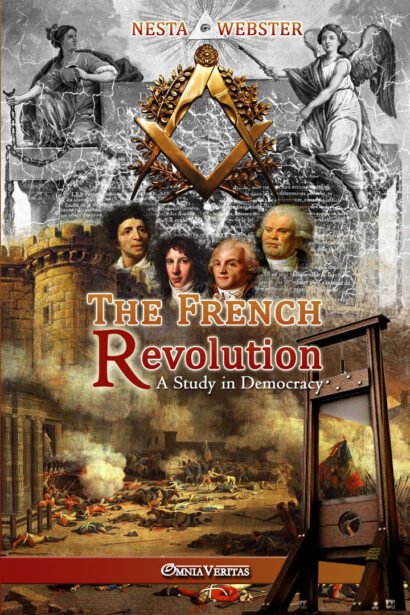
The French Revolution
€35.00
A study in democracy
The French Revolution is no dead event; in turning over the contemporary records of those tremendous days we feel that we are touching live things; from the yellowed pages voices call to us, voices that still vibrate with the passions that stirred them more than a century ago – here the desperate appeal for liberty and justice, there the trumpet-call of “King and Country”; now the story told with tears of death faced gloriously, now a maddened scream of rage against a fellow-man.
-
Monarchy or Money Power
€25.00
The difficulty which all the medieval Kings experienced in greater or less degree was the establishing of themselves in the People’s love. The King needed the People as much as the People needed the King, but it was ever the object of interested parties to hold them asunder. And so was witnessed a perpetual struggle between, on the one hand, King and Church, anxious alike to hold their servants and ministers in subjection to duty, and, on the other hand, unruly servants and ministers, barons and prelates, seeking means of sustaining themselves in revolt against both spiritual and temporal authority, and so very often becoming allied to the financial powers.
-
The World Conquerors
€28.00
The real war criminals
WORLD CONQUERORS expresses some of the bitterness and contempt of enslaved Europeans for the rulers of the “victorious nations”. It shows that by being urged to throw off the German yoke, the central European nations were tricked into becoming satellites of the Soviet.
-
Hitler’s Secret Backers
€20.00
The Financial Sources of National Socialism
The book you are about to read is one of the most extraordinary historical documents of the 20th century. Where did Hitler get the funds and the backing to achieve power in 1933 Germany? Did these funds come only from prominent German bankers and industrialists or did funds also come from American bankers and industrialists?
-

The Globalists and the Islamists
€23.00
Fomenting the “clash of civilizations” for a New World Order
The following study will take a look at the history of the region that America has become entangled in, a region that used to be, and to some degree still is, almost entirely controlled by Britain. Is this current “War On Terror” truly a war to bring freedom to the region and to promote traditional American ideals, or is it a power-play to solidify global American hegemony? And what does Britain have to gain?
-
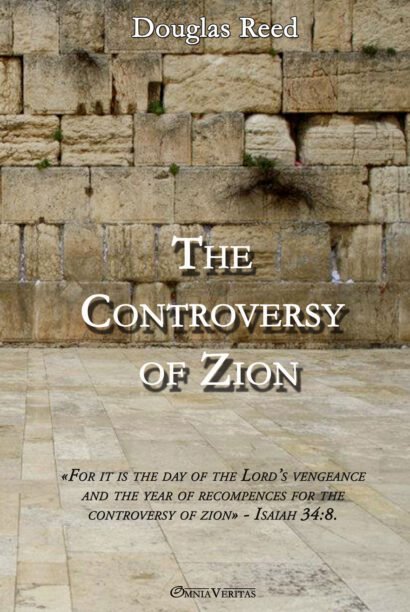
The Controversy of Zion
€40.00
It is one of the commonplaces of history that adverse circumstances offer no obstacle to men of outstanding energy and ability. Douglas Reed, who described himself as “relatively unschooled”, started out in life as an office boy at the age of thirteen and he was a bank clerk at nineteen before enlisting at the outbreak of World War I. A less promising preparation for a man destined to be one of the most brilliant political analysts and descriptive writers of the century could hardly be imagined. He was already 26 years old when he reached the London Times in 1921 as a telephonist and clerk; and he was 30 when he finally reached journalism as sub-editor.